Anjum Hajat
Job Title
Associate Professor, Department of Epidemiology; Bridges Center Faculty Associate
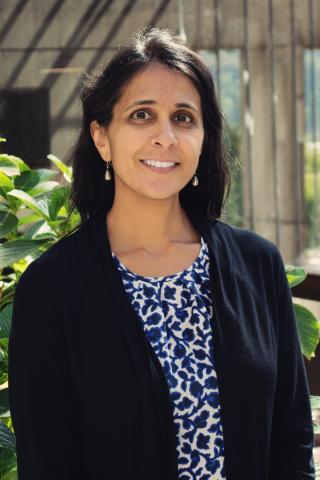
Profile Photo
Image
Email Address
Dr. Hajat’s current research interests look at understanding the social and environmental stressors that disproportionately impact disadvantaged populations and how these stressors impact a variety of health outcomes, a research area that may have implications for understanding the underlying causes of health disparities. She was awarded a NIH K99/R00 Career Development Award to study the intersection of psychosocial stressors and air pollution on CVD. She also conducts research on the impacts of financial instability and precarious work on health outcomes. These upstream factors are critical to better understanding population health. In addition, Dr. Hajat is interested in biomarkers that are impacted by social and environmental stressors; this line of research aims to gain a better understanding of the mechanisms by which social stressors cause disease. Lastly, she is interested in applying novel epidemiologic methods to her research.
Research/Teaching Areas: Cardiovascular & Metabolic Disease, Environmental & Occupational Health, Epidemiologic Methods, Social Determinants of Health
Current Projects/Research: Lesinski JD, Yi J, Ghias E, Fisher JL, Baker MG, Llanos AAM, Rogers CR, Quist AJL, Felix AS, Paskett ED, Elsaid MI, Richardson D, Hajat A, Sundi D, Eisfeld AK, Rosko AE, Pawlik TM, Obeng-Gyasi S, Cruz-Monserrate Z, Carson WE, Bittoni M, Plascak JJ. A population-based study of US cancer mortality by occupation, 2020-2023. In Press Lancet Oncology.
Iwu CD, Cox SN, Sohlberg SL, Kim AE, Logue J, Han PD, Sibley TR, Ilcisin M, Fay KA, Lee J, McCulloch DJ, Wang Y, Boeckh M, Englund JA, Starita LM, Hajat A, Chu HY. “I probably shouldn’t go in today”: Inequitable access to paid sick leave and its impacts on health behaviors during the emergence of COVID-19 in the Seattle area. PLOS One 2024 Sep 10;19(9):e0307734
Oddo VM, Mobuark S, Andrea SB, Ahonen EQ, Winkler MR, Vignola EF, Hajat A. The Association between Precarious Employment and Stress in the United States. Preventive Medicine. 2024 Aug 30:108123.
Vignola EF, Andrea SB, Hajat A, Weathers TD, Ahonen EQ. What Extraordinary Times Tell Us About Ordinary Ones: A Comparative Case Study of Precariously Employed Food Workers in Two U.S. States Early in the COVID-19 Pandemic. Journal of Critical Public Health. 2024, 1(1): 45-60
Hajat A, Andrea SB, Oddo VM, Winkler MR, Ahonen EQ. Ramifications of Precarious Employment for Health and Health Inequity: Emerging Trends from the Americas. Annual Reviews of Public Health. 2024 45:1
Hawkinson CB, Andrea SB, Hajat A, Minh A, Owens S, Blaikie K, Seiler J, Molino AR, Oddo VM. A Cross-sectional Analysis of Precarious Work Schedule Practices and Depression in the United States. Social Science and Medicine – Population Health. 2023; 22:101413.
Oddo VM, Zhuang CC, Dugan JA, Andrea SB, Hajat A, Peckham T, Jones-Smith JC. Association between Precarious Employment and BMI in the United States. Obesity. 2023; 31(1):234-242.
*Blaikie KJ, Eisenberg-Guyot J, Andrea SB, Owens S, Minh A, Kiel AP, Hajat A. Differential employment quality and educational inequities in mental health: A causal mediation analysis. Epidemiology. 2023.
*Eisenberg-Guyot J, Blaikie KJ, Andrea SB, Oddo VM, Peckham T, Minh A, Owens S, Hajat A. A tutorial on a marginal structural modeling approach to mediation analysis in occupational health research: investigating education, employment quality, and mortality. American Journal of Industrial Medicine. 2023.
Zhuang CC, Jones-Smith JC, Andrea SB, Hajat A, Oddo VM. Maternal precarious employment and child overweight/obesity in the United States. Preventive Medicine. 2023 Mar 2:107471.