Research Report: Using Creative Methods to Evaluate the Practice of Upcycling in Managing Textile Waste
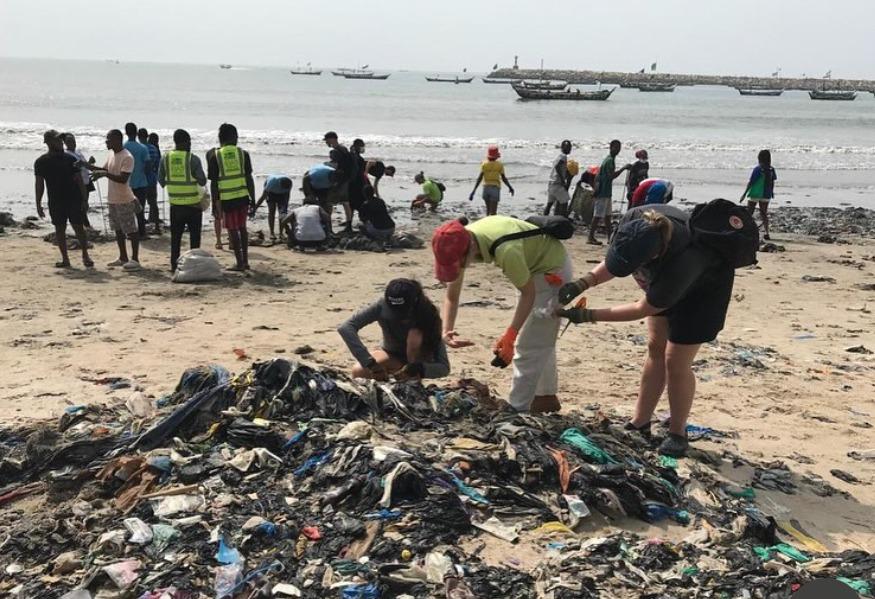
1. Photo taken on Osu Beach in Jamestown, Accra during The OR Foundation’s Beach Clean Up on February 23, 2024.
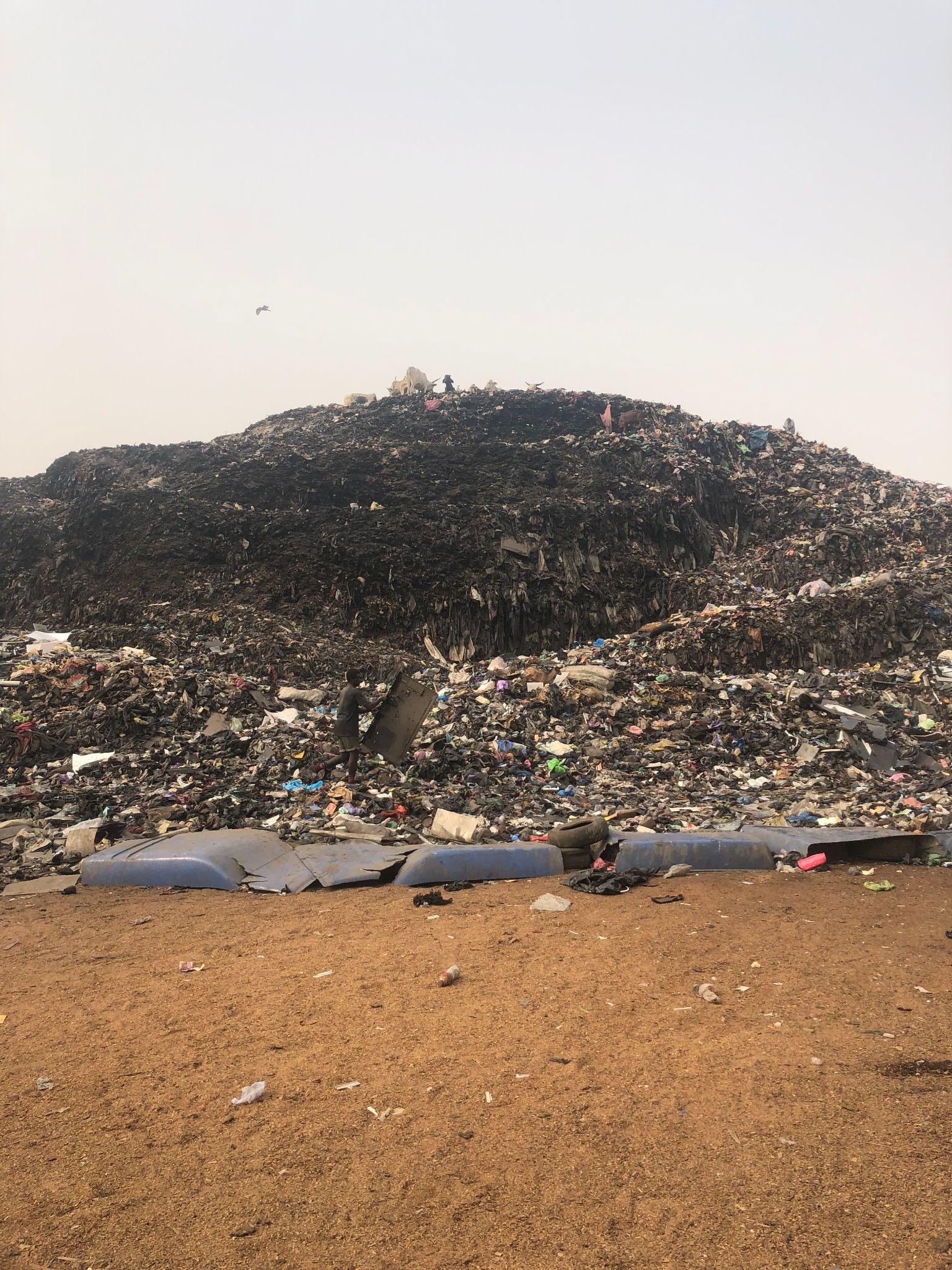
2. Dump site in Accra. Photo taken by Ellie Cleasby, February 2024.
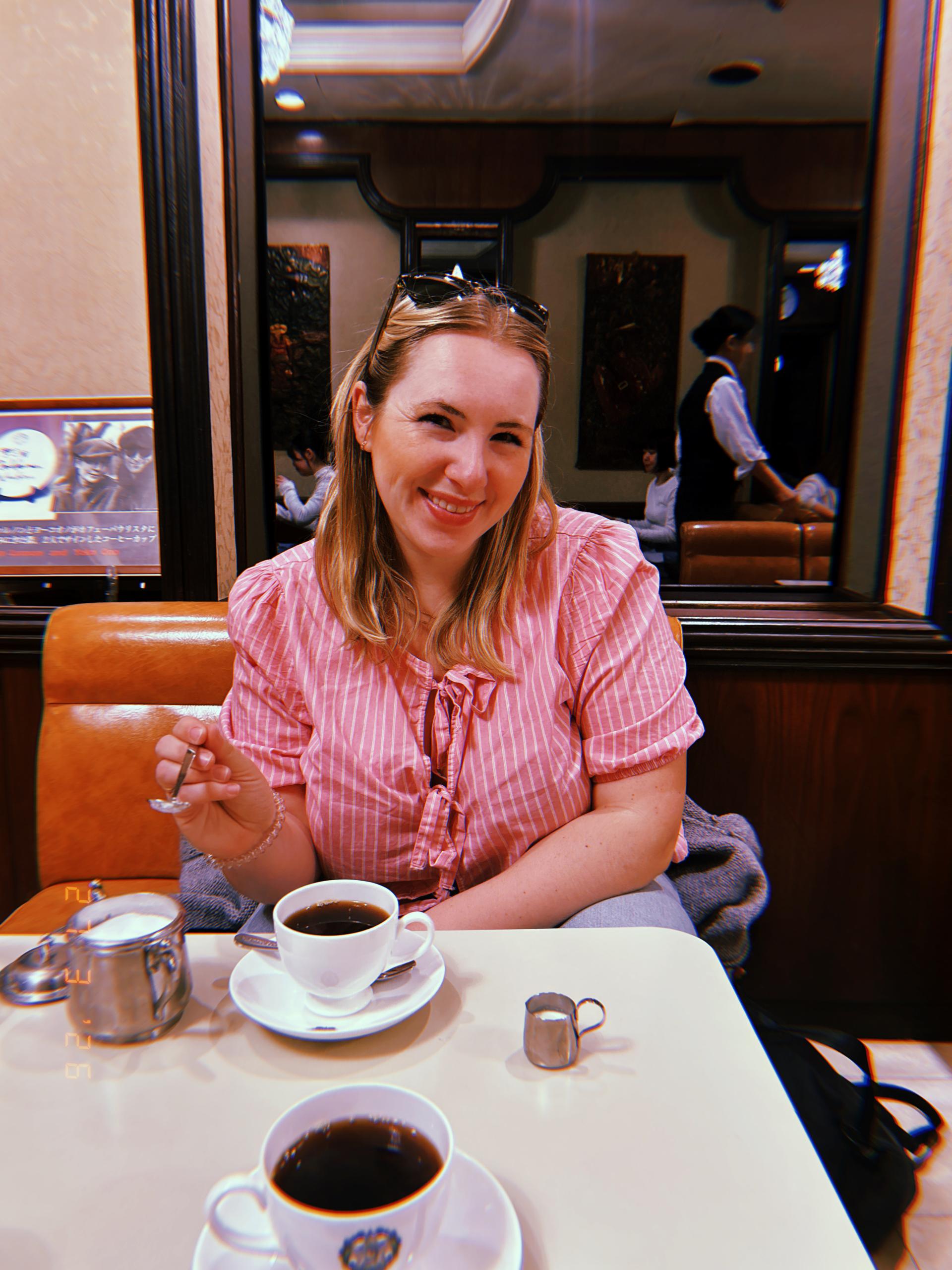
3. Ellie Cleasby.
Take Care, Repair, Rewear: Using Creative Methods to Evaluate the Practice of Upcycling in Managing Textile Waste
Report written by Ellie Cleasby, PhD, Geography, recipient of the Charles Bergquist research grant in 2024.
Textile waste moves through complex global commodity chains from the Global North to the Global South. Textile waste creates a myriad of economic, social and environmental problems, which become concentrated in places like Ghana in the Global South, where large volumes of textile waste are discarded. Secondhand clothing often moves along routes established under colonialism. My fieldwork linked Kantamanto market in Accra, Ghana (the world’s largest secondhand clothing market) to the United Kingdom from where more than 50% of the clothing arrives from. Now a $96 billion dollar industry, value is extracted from waste clothing as it is moved between the Global North and South. My fieldwork in Accra and London shows that this movement of textile waste between the Global North and South is also a mechanism used to sustain global inequality. I explore the ways in which individuals use upcycling practices to manage and resist these forms of structural inequality.
Fashion scholars in the Global North theorise that participatory fashion practices, such as making and mending, could generate a sensibility for sustainability among those engaging in them because people are more likely to take care of things that they have created. Others believe that an orientation towards sustainable fashion might develop from consumers understanding the time and labour that vulnerable actors commit to making or (re)producing their clothing through upcycling practices. I study both of these dynamics in each of my fieldsites. In Kantamanto market, vendors upcycle items to resell them to consumers within circular economies. This is subsistence level work, and necessary for survival. In the UK, upcyclers choose to engage in this work as either paid or unpaid labour. Studying upcycling practices in both Ghana and the UK allows me to understand the nuanced practices of upcycling and its role in managing textile waste in each location.
Key Findings:
- Textile waste is moving through global commodity chains, although the precise details are obscured. This textile waste does produce economic harms (high waste management cost), social harms (health impacts, living among waste) and environmental destruction (destruction of marine and coastal ecosystems) in Ghana.
- Upcycling practitioners are guided by different motivations in the UK (community, waste reduction, environmental sustainability) compared to Ghana (economic necessity, environmental sustainability).
- Beyond differences in meanings, I found that the basic elements of upcycling are the same in both London and Accra. Sewing machines and secondhand clothing/fabric are the most common materials of the practice. Creativity, the ability to operate a sewing machine or other upcycling tools such as crochet hooks are key competences upcyclers need to engage in the skilled practice of upcycling.
- From engaging in upcycling with practitioners in each site, I conclude that some upcycling practices can be difficult, physically demanding and/or messy work.
- Networks are key to practicing upcycling in both London and Accra. In London, these networks are primarily built through community repair spaces such as “sew-cials”. In Accra, these connections are largely built through Kantamanto market. The networks allow for the sharing of ideas, skills, advice and secondhand materials, all of which make upcycling easier, or the final product better.
- All of these networks require care and ongoing maintenance in order to sustain the webs of connection that underpin upcycling practice. In this way, caring relationships can be understood as central to upcycling practice. This knowledge is an important step in finding effective strategies to manage textile waste, and to build global circular economies.
- There is a desire to build circular economies for textiles among upcyclers in both Ghana and the UK.