Rights on the Line: Migrant Fishers in Washington State Ports
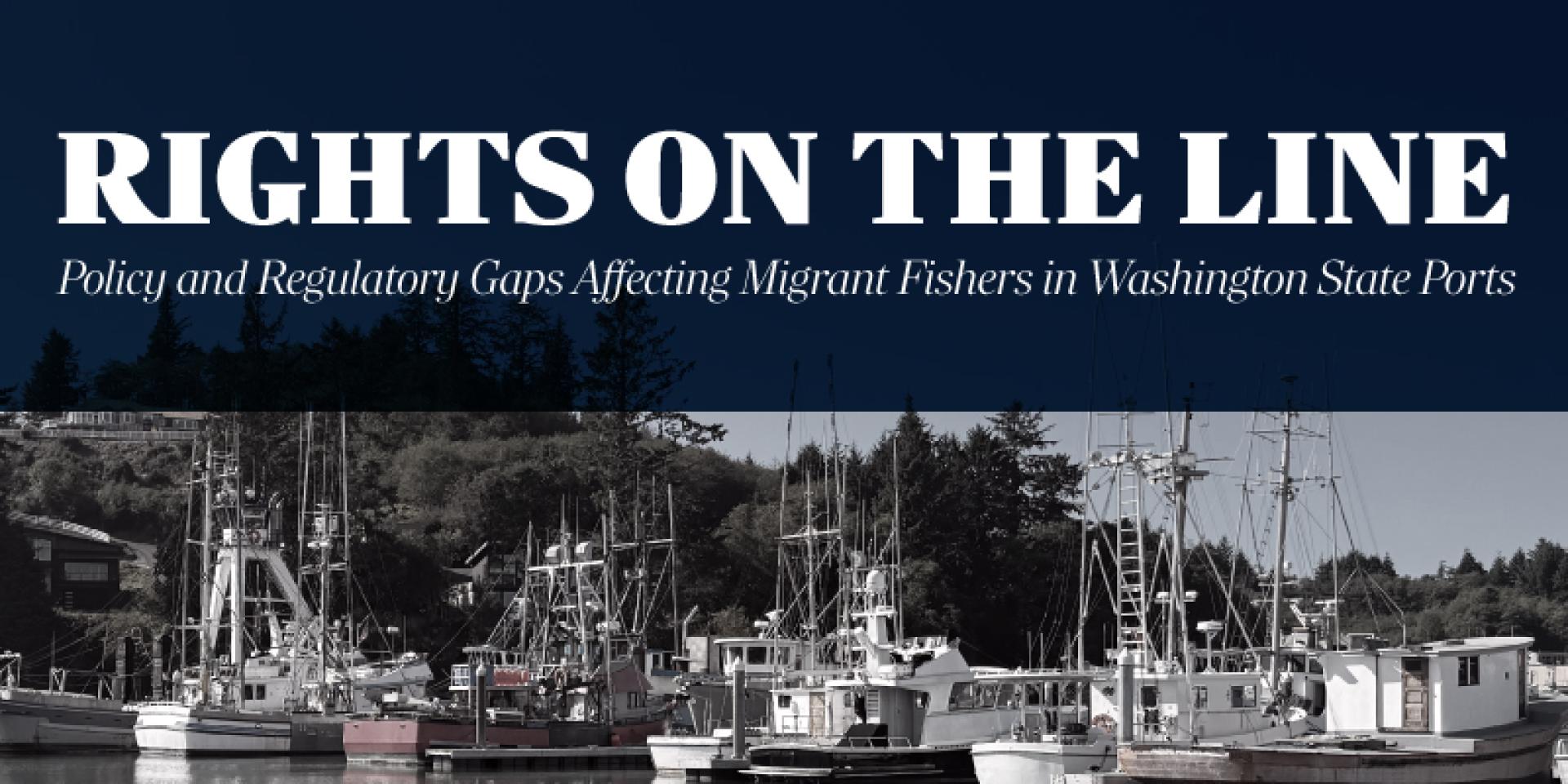
The Bridges Center research team is proud to present “Rights on the Line: Policy and Regulatory Gaps Affecting Migrant Fishers in Washington State Ports.” This project examines the working experiences of migrant fishers who have docked or offloaded catch in Washington state ports. It is a mixed-methods study that incorporates policy and regulatory data analysis with interview findings from fishers and a range of subject matter experts in commercial fishing, highly migratory species, human trafficking, regulatory environments, and more.
This report covers a range of topics related to the conditions and experiences of migrant fishers. We provide information on the trends in experiences of the twenty-nine migrant and U.S. citizen fishers we interviewed, interacted with, or surveyed. We also introduce historical and current labor relationships between the United States and our interviewed migrant fishers’ home countries, applicable regulations and policies, and examples of approaches and limitations to combatting forced labor.
In this research project, we seek to better understand the experiences of migrant fishers who dock or unload catch at Washington state ports. We gathered information from fifteen migrant fishers, fourteen U.S. citizen fishers, and over thirty-five subject matter experts.
Our research process focused on these questions:
-
What trends exist across migrant fishers’ experiences and perspectives?
-
Regarding protecting migrant workers in the commercial fishing industry from exploitation, what gaps, if any, currently exist in labor and human rights policy and regulation at local (state), national, and international levels?
-
What role can corporate accountability play in preventing forced labor and wage theft from fishers in global supply chains?
Key Findings:
-
Exemptions in U.S. law, codified through the Commercial Fishing Industry Vessel Anti-Reflagging Act of 1987, allow migrant fishers to work without work authorization or U.S. work visas and leave them vulnerable to forced labor and exploitation.
-
All migrant fishers who were interviewed experienced indicators of forced labor.
-
Complicated policy and regulatory frameworks that intersect with commercial fishing make it difficult to address violations of workers’ rights, including alleged incidents of forced labor.
-
Migrant and U.S. citizen fishers reported difficult living and working conditions with many challenges to establishing safe workplaces.
-
Additional worker-centered research is needed to better understand and support the needs of Washington’s commercial fishers and their industry.
-
Approaches to combat forced labor in the commercial fishing supply chain are varied and uneven and require centering the most impacted workers and communities.
Executive Summary & Policy Recommendations | Full Report
This report was developed by the Bridges Center's Research Team, Rachel Erstad, Maya Cruz, Kait Johnson, and Justin Hirsch. Please reach out to Bridges Center Research Director Rachel Erstad, with any questions at rerstad@uw.edu.