Distinguished Labor Studies Alumni: Lily Wilson-Codega
Since its founding thirty-four years ago, the Harry Bridges Center for Labor Studies has educated countless University of Washington students about the labor movement. As a result, many have chosen to pursue careers in labor organizing and advocacy. Each year, we honor a particular former student’s accomplishments with the Distinguished Alumni in Labor Studies Award.
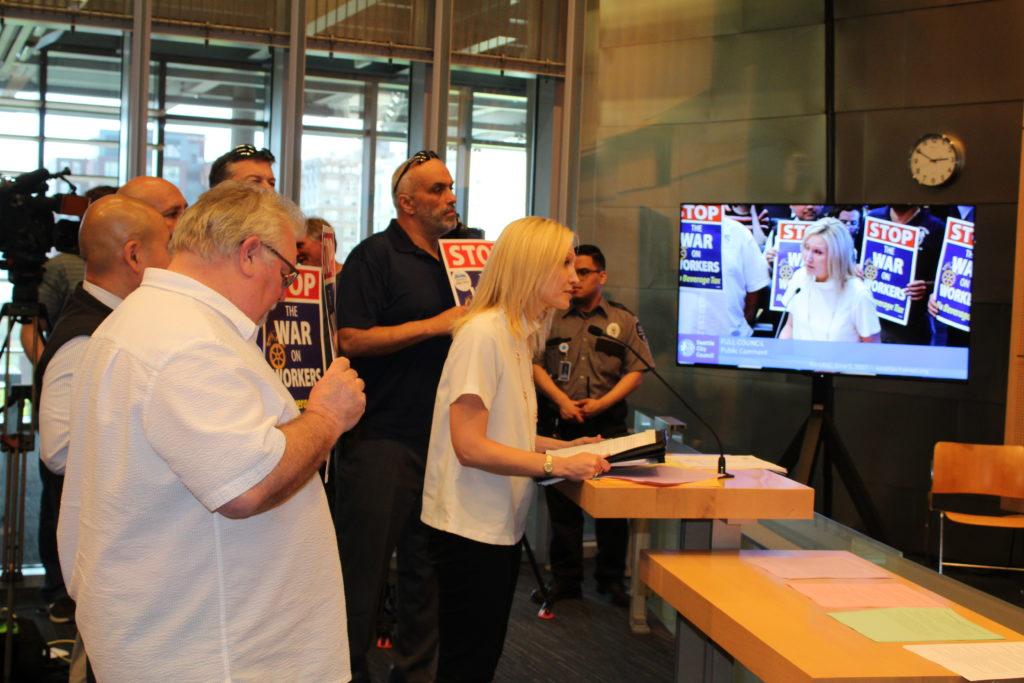
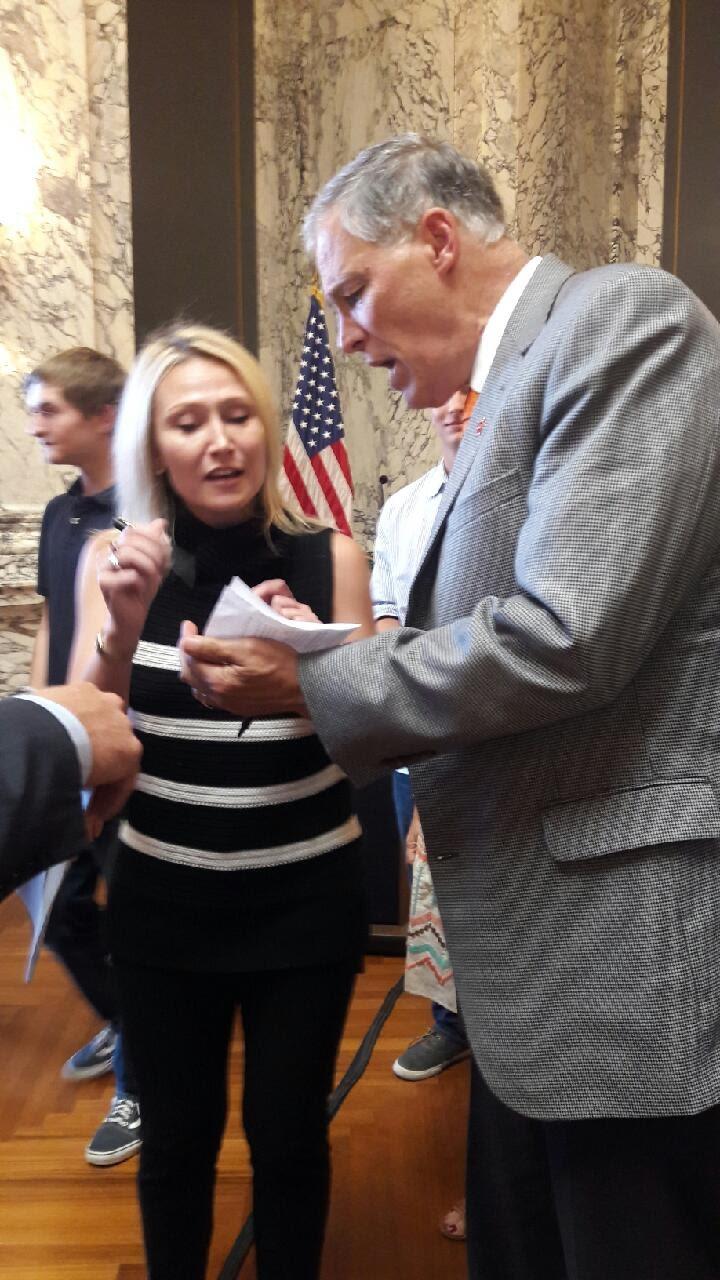
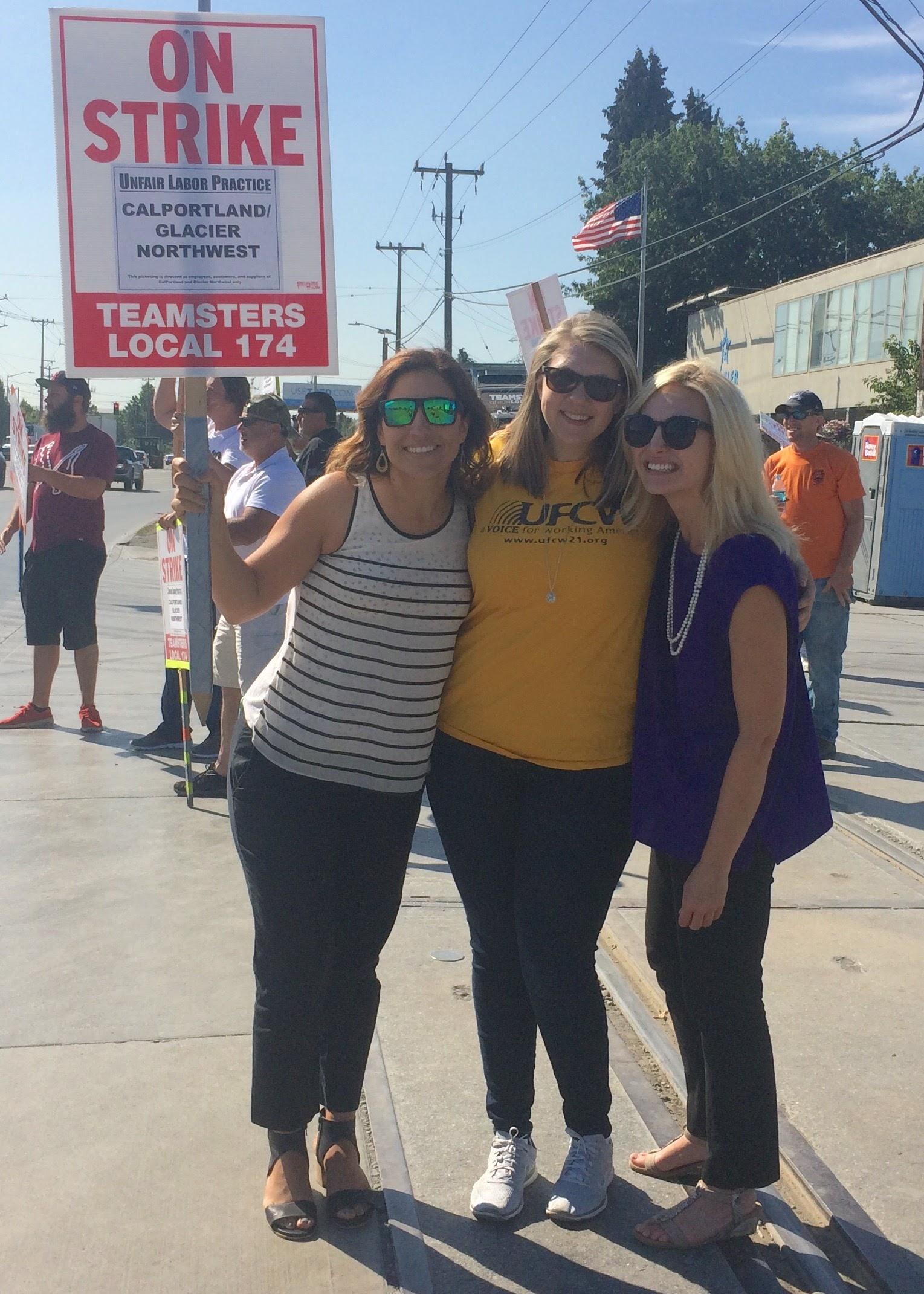
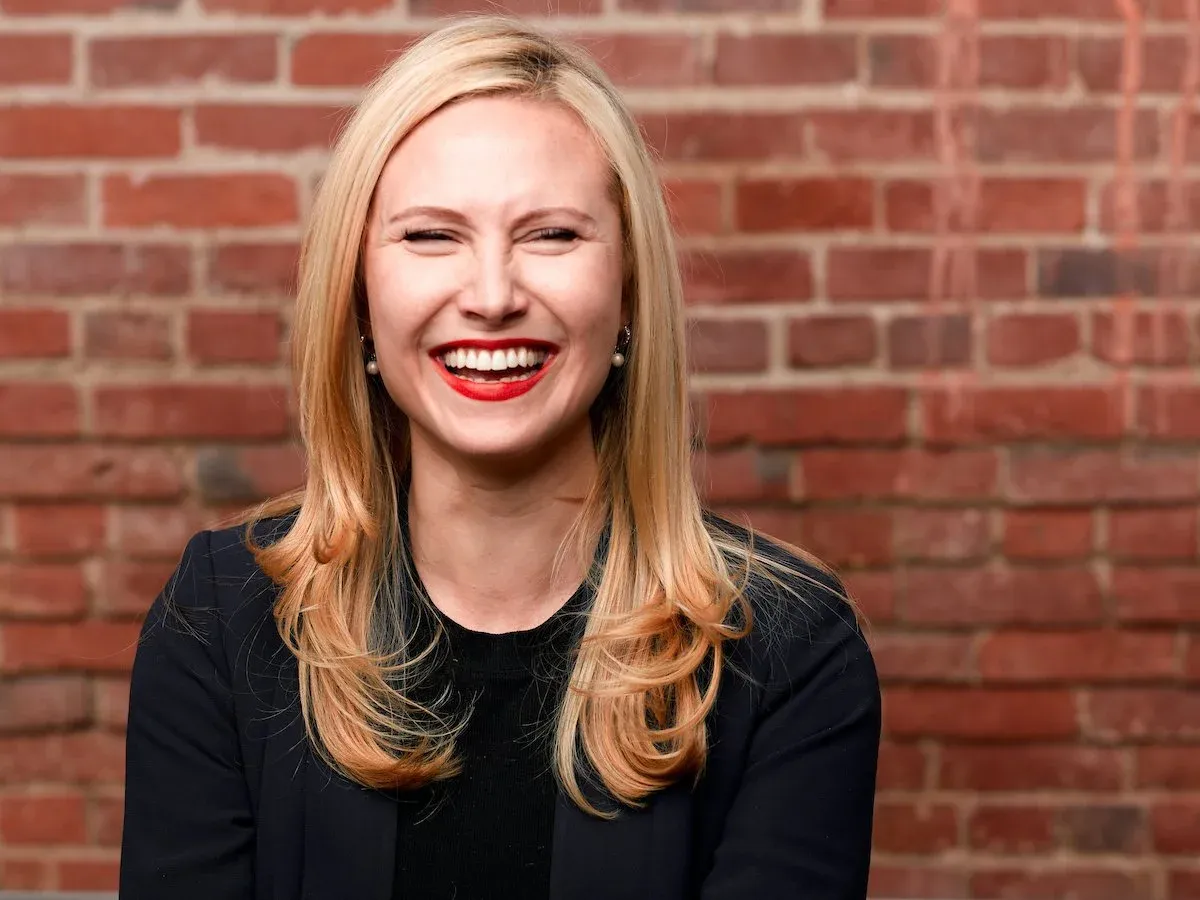
In Pacific Northwest political and labor circles, Lily Wilson-Codega (UW, Class of 2006) is a familiar face. Over the past twenty years, she has organized campaigns, lobbied, and served the public in a range of roles, particularly on behalf of unions and non-profit organizations. For eight years, Wilson-Codega worked with the Teamsters, doing legislative and electoral work for Local 117 and Joint Council No. 28, a body representing union members across Washington State, Alaska, and northern Idaho. She then served as Director of the Office of Intergovernmental Relations of the City of Seattle. She now has a consulting practice, collaborating with a variety of unions to help advance their budget and policy priorities.
Wilson-Codega’s impactful career in advocacy began as a student in Labor Studies at the University of Washington. In between stints studying abroad in Europe and the Middle East, Wilson-Codega enrolled in a class with then-Bridges Center Director Sarah Laslett, where she was exposed to the power of collective action for workers’ rights. “We learned about the 1934 West Coast waterfront strike led by Harry Bridges,” Wilson-Codega recalls. “We learned about the other struggles that defined this country including the Memphis sanitation workers who struck in 1968 carrying signs that read I AM A MAN, the strike Dr. King went to Memphis to support when he was killed. Years later, when I worked at Teamsters Local 117 under Tracey Thompson, she took our Waste Management drivers out on strike, and we carried those same signs. I owe a debt to Sarah Laslett and the Bridges Center for all those experiences.”
In 2006, after graduating with a double major in Comparative History of Ideas and Political Science, she worked on the “No on I-920 campaign,” the 2006 fight to keep Washington’s estate tax, served as legislative intern for the Washington State Labor Council, then worked for three years as Political Organizer for the MLK Labor Council before moving to the Teamsters in 2010. She is especially proud of the many contract campaigns she participated in. “The people I worked for were making history with what they did,” she explains, “what they refused to settle for and who they were willing to go up against, often at real personal cost. I was especially proud to work with Tracey Thompson, Terri Mast, and Cindy Domingo, a few of my heroes here locally.”
Wilson-Codega is an organizer in her own right. “Lily knows how to win,” says Ali Vekich, a member of ILWU Local 19 and a past collaborator with Wilson-Codega on union campaigns. “She is incredible at mapping out strategies and seeing a campaign through from beginning to end.” Just as important, Vekich adds, “ she leads with humility and honors each person she works with.”
When not organizing, Wilson-Codega’s pastimes reflect her passion for traveling (she likes learning languages) and her childhood in the Pacific Northwest (she enjoys fishing and eating Wilapa Bay oysters).
Lily graciously took time out of her busy schedule to answer some questions for the Bridges Center about her time at the University of Washington and her career in the labor movement.
How did you first get involved in the labor movement?
I was a student at the UW and took [former Bridges Center Director] Sarah Laslett's [Labor Research] course. Sarah's class was amazing and Sarah is amazing. I think she really connected theory and the practice for her students in a very accessible way. We studied labor history and had the opportunity to get involved with active contract, organizing and policy campaigns while we were students.
What was your experience with Labor Studies as a student at the University of Washington?
Sarah opened my eyes to the fact that many of the rights we take for granted were hard fought and won, often at real cost, by some of the labor and civil rights leaders who are still active now. We learned about the 1934 West Coast waterfront strike led by Harry Bridges, the ILWU leader this Center is named for. How the ILWU organized plantation workers in Hawaii, refused to load scrap iron bound for Japan in 1938 or to unload South African cargo during apartheid and the price they paid for taking those positions. The federal government spent two decades trying to deport and imprison Bridges for what he was trying to do.
We learned about the other struggles that defined this country including the Memphis sanitation workers who struck in 1968 carrying signs that read I AM A MAN, the strike Dr. King went to Memphis to support when he was killed. Years later, when I worked at Teamsters Local 117 under Tracey Thompson, she took our Waste Management drivers out on strike, and we carried those same signs. I owe a debt to Sarah Laslett and the Bridges Center for all those experiences. I feel lucky to have been someone she invested her time and expertise in.
What has been your career since graduating from the UW? How have you remained connected to the labor movement?
After college I worked on the No on I-920 campaign, the 2006 fight to keep Washington's estate tax and the education funding it pays for. Kelly Evans, Laura Lockard and Sandeep Kaushik were running that campaign and I’m grateful to them for pointing me toward the Washington State Labor Council's legislative internship. That was a formative experience working under Jeff Johnson, Robby Stern and Diane McDaniel, the WSLC's legislative and political team, Rick Bender and Al Link were at the helm at the time.
From there I had the opportunity to work at the King County Labor Council, now MLK Labor, the Economic Opportunity Institute, Teamsters Local 117 and Teamsters Joint Council 28. In 2018 Mayor Durkan appointed me Director of the City of Seattle's Office of Intergovernmental Relations, where I served through the end of 2021. I then joined NWP Consulting, and earlier this year started my own practice.
What are your proudest accomplishments?
Many of the contract campaigns I got to be part of. The people I worked for were making history with what they did, what they refused to settle for and who they were willing to go up against, often at real personal cost. I was especially proud to work with Tracey Thompson, Terri Mast, and Cindy Domingo, a few of my heroes here locally.
Tracey Thompson was the first woman to serve as principal officer of Teamsters Local 117 and the first woman on the Executive Board of Joint Council 28. She came to the Local as its staff attorney in 2003, won 26 of her first 27 arbitrations and became Secretary-Treasurer in 2008. Under her leadership the Local negotiated some of the strongest contracts in its history, brought close to 2,000 taxi and rideshare drivers into the Teamsters with Leonard Smith, L117’s brilliant Organizing Director. I remember my first year there thinking I had entered some kind of alternate universe. That local was fearless, strategic, constantly pushing the envelope. So much of that was Tracey, who she was and her vision. Her staff and her members would have followed her to the ends of the earth.
I remember Tracey filing charges from her car in the middle of the night during our 2010 Coca-Cola strike, after the company went after her member’s healthcare. I think that was my first ambulatory picket. In the summer of 2012, we were on strike at the Davis Wire mill in Kent and against Waste Management at the same time, and I remember alternating between Davis Wire and Waste Management strike shifts while we were doing outreach to local elected leaders to enforce the penalties for missed collections. Tracey was out there on the picket line when she was deep in her cancer treatment and had lost her hair. Waste Management ended up paying the City of Seattle 1.24 million dollars, and Tracey won an industry-leading contract for her members. She was strong, brilliant, strategic and worked like a woman possessed. I remember honestly questioning if I could keep up with Tracey that L117 team several times working there, including Brenda Wiest, the L117 Government Affairs Director, and an amazing leader in her own right. Tracey stepped down in 2015 because of her health, and we lost her in January 2023 to cancer.
I met Terri Mast when I was at the King County Labor Council, and I’m still awe of her – she is “retired” but I got to spend time with her as recently as last weekend on our ILWU info picket! As you know, Terri came up through the reform movement in ILWU Local 37, the Alaska cannery workers' union, where she and her husband Silme Domingo and their friend and colleague Gene Viernes were fighting to end many unjust and discriminatory practices in their industry. They brought discrimination lawsuits that won some of the largest settlements for cannery workers, and in 1980 their reform slate won control of the Local. On June 1, 1981, Silme and Gene were murdered at the union hall in Pioneer Square for this work at 29 years old.
Terri was then elected president of Local 37, the first woman to lead an ILWU local. Running a union is an impossible job on a good day. Can you imagine that level of responsibility at such a young age after suffering such unimaginable tragedy? She and Silme's sister Cindy Domingo, another amazing civil rights leader here locally, helped build the Committee for Justice for Domingo and Viernes, which spent years proving the murders were ordered from the top. In December 1989 a federal jury in Seattle found Ferdinand and Imelda Marcos liable for the killings and awarded 15.1 million dollars.
Cindy has dedicated herself to humanitarian work, across the country and across the world. I was lucky to be able to work with her in Councilmember Gosset’s office. In 2010 I went to Cambodia on an AFL-CIO Solidarity Center delegation. We then received a State Department grant to bring ten of our Cambodian colleagues to the APALA Convention in Oakland and Seattle, and Cindy helped us organize the delegation, advised me on how to pass a resolution at the APALA Convention, organize a week in trainings in Seattle, a tour of the International District with Uncle Bob Santos, and helped us advocate for sweat-free purchasing policies at the city and state level.
Why is Labor Studies important to you? What do you hope to see in the future?
The Bridges Center treats labor as serious scholarship and sends students back into the field with context, experience and real skills. You all do such a great job of keeping our history alive. Silme Domingo and Gene Viernes were murdered for what they were fighting for and the first I’d heard of this was at the Bridges Center. I believe Terri Mast now serves on the Center's Visiting Committee. Terri’s daughter Dr. Ligaya Domingo was the first person to receive this award. I think recognizing what they all fought for and lost so we could enjoy the rights we enjoy today is important to remember.
Anything else you would like to add about yourself?
I’m honored to receive this award and, if any legislators on the budget committees are reading this, please protect funding for the Bridges Center!