Announcing 2026-2027 Washington State Labor Research Grant Recipients
Awarded to University of Washington faculty and advanced graduate students, the Washington State Labor Grants are designed to support policy-oriented research on aspects of labor directly relevant to policymakers in Washington state. We are pleased to announce four new projects for the 2026-2027 academic year.
  |
Who Bears the Cost? Investigating AI-Driven Workforce Displacement in Washington State Sana Khalil, Economics and Zaher Kmail, Statistics Washington State ranks among the U.S. states most vulnerable to AI-driven job displacement, while the Seattle–Tacoma–Bellevue metropolitan area is projected to lose approximately 161,000 jobs under the median adoption scenario, placing it among the nation's highest-risk metropolitan labor markets. Existing AI risk indices primarily assess vulnerability at the occupation, industry, or regional level, leaving an important question unanswered: which workers within these vulnerable occupations and regions bear the greatest burden? Specifically, existing research does not clarify how AI-driven job displacement unevenly affects workers based on demographic factors. This study fills this gap by examining how AI-driven workforce changes in Washington State differentially impact women, people of color, low-wage workers, and young employees, utilizing worker-level data from the Washington State Employment Security Department (2020–2026) combined with occupation-specific AI vulnerability scores from recent datasets. This research will provide a detailed breakdown of AI-related job displacement by demographic groups, highlighting the most at-risk workers. Additionally, the analysis will evaluate whether protections based on occupational requirements are evenly available and whether AI automation is limiting entry-level hiring opportunities, which are crucial for upward mobility among disadvantaged groups. |
 |
Labor Rights for Domestic Workers in Washington State Kim England, Geography In March 2026, Washington state passed a Domestic Workers Bill of Rights, to take effect in July 2027. Drawing inspiration from Seattle’s pioneering 2019 ordinance, the new state law provides legal protections such as minimum wage, overtime, and anti-discrimination measures for a historically vulnerable workforce. Meanwhile, in the City of Seattle, work is currently underway to amend the 2019 Seattle Domestic Workers Ordinance (DWO) to include, for example, requiring written agreements and advance notice of termination. This research project uses qualitative methods to trace the various strategies and tactics that led up to these policy wins, as well as following the next steps in building out the state legislation and in potentially amending Seattle’s DWO. In addition, a statistical analysis of domestic workers’ income and hours worked is combined with a comparative review of domestic worker legislation across different states. Ultimately, this research chronicles the ongoing and varied efforts by domestic workers, their employers, and different government entities to improve the working conditions of domestic workers. |
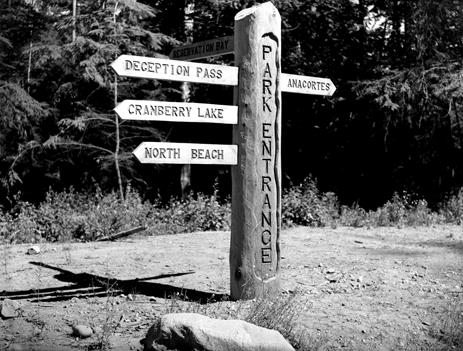 |
“We Can Take It!”: Labor, Landscape, and the Organizational Roots of Workforce Inequity in Washington State Parks Lindsay Maurer, Sociology Washington State’s public parks, forests, and roads are commemorated as the legacy of the Civilian Conservation Corps (CCC), a celebrated New Deal program that operated from 1933 to 1943. However, commemorations of CCC labor obscure a more complex history. Before, during, and after the CCC program, Indigenous workers, immigrants, incarcerated laborers, and state unemployment camp residents all built the same landscapes under sharply unequal conditions of coercion, compensation, and recognition. Drawing on racialized organizations theory and settler colonial theory, this project examines how the CCC reorganized the labor regimes on park lands and fixed public memory on one workforce while rendering the others invisible. Through archival research and geospatial analysis, Maurer will recover the overlapping labor regimes that developed Washington State’s public lands and trace the organizational roots of racial disparities in the Washington State parks workforce. Findings will be shared in a policy brief with recommendations on workforce equity, hiring practices, public interpretation, and tribal sovereignty to inform the ongoing work of the Washington State Parks Pro-Equity Anti-Racism (PEAR) team. |
 |
Evaluating Drivers for Safer Cosmetic Alternative Implementation in Nail Salons Through a Perspective-Based Occupational Needs Assessment Jacob Ngo, Environmental and Occupational Health Sciences Committed to serving historically underrepresented occupational communities, Ngo is currently working with the nail salon community and various partners in King County, Washington. His work involves understanding the health and safety needs of nail salon businesses and workers in order to understand what the current occupational climate and attitudes are of King County nail salons from their perspective. Furthermore, he hopes to explore implementation factors to safer cosmetic alternatives in nail salons to highlight unique experiences surrounding safer cosmetic alternative integration or lack thereof. This is integrated with Washington's Toxic Free Cosmetic Act, in which this work will further unearth knowledge gaps of understanding policy, as well as awareness of what constitutes as a safer cosmetic alternative. Overall, Ngo aims for his work to have a tangible impact in creating and improving accessible support programs for nail salons and other beauty-centered businesses in order to better integrate safer cosmetic alternatives to improve health and well-being outcomes for the community. |